

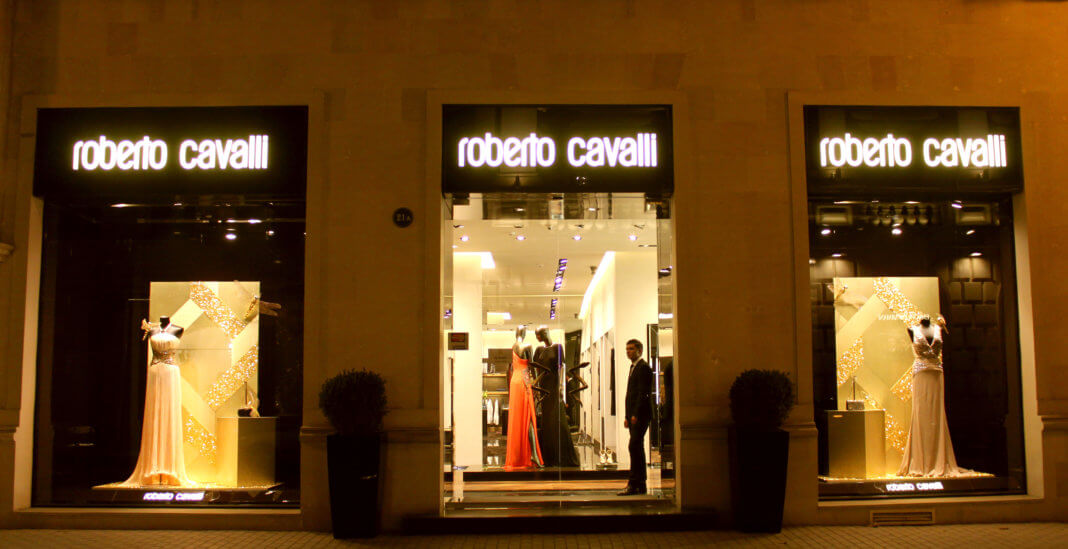
Roberto Cavalli became a household name in the world of luxury fashion with the launch of his debut collection and the subsequent inauguration of his first boutique in the early 1970s. Famous for his distressed denim and animal prints, Cavalli’s innovative designs attracted the attention of fashion houses including Hermes and Pierre Cardin. Over the years, those designs emphasised opulence above all else – a strategy that did not bode well for Cavalli in the contracting luxury retail market.
Cavalli’s brand is now coming apart at the seams. The US branch of Roberto Cavalli filed for bankruptcy on 29 March 2019. The company cited declining sales for the precipitous downturn, and employees were notified of store foreclosures as they happened. Yet, the company’s slumping sales are only part of their misfortune.
In recent years, the brand’s styles were viewed increasingly as outdated. Cavalli attempted to inject new life into the brand with the arrival of Paul Surridge, a young designer who rose through the ranks of men’s fashion associated with brands including Burberry and Zegna. Despite Cavalli’s efforts, Surridge’s vision and Cavalli’s iconic patterns never meshed well, only compounding sales woes.
Cavalli’s success depended on its bricks-and-mortar stores in luxury malls. Over the last decade, however, an over-reliance on physical stores has adversely affected retailers in all sectors, as consumers diversified their purchasing habits. Other fashion brands that failed to adopt e-commerce were also hit hard. Moreover, successful brands also employed strategies like virtual modelling and real-time digital measurement software to drive sales.
Cavalli’s failure to innovate, both in terms of style and sales practices, may have destroyed the fashion house. The liquidation of Cavalli’s US assets was finalised in spring 2019, and the remainder of their European assets were sold to DAMAC Properties of Dubai.