Leading with Heart
Interview with
Pedro Carvajal
CEO, Carvajal
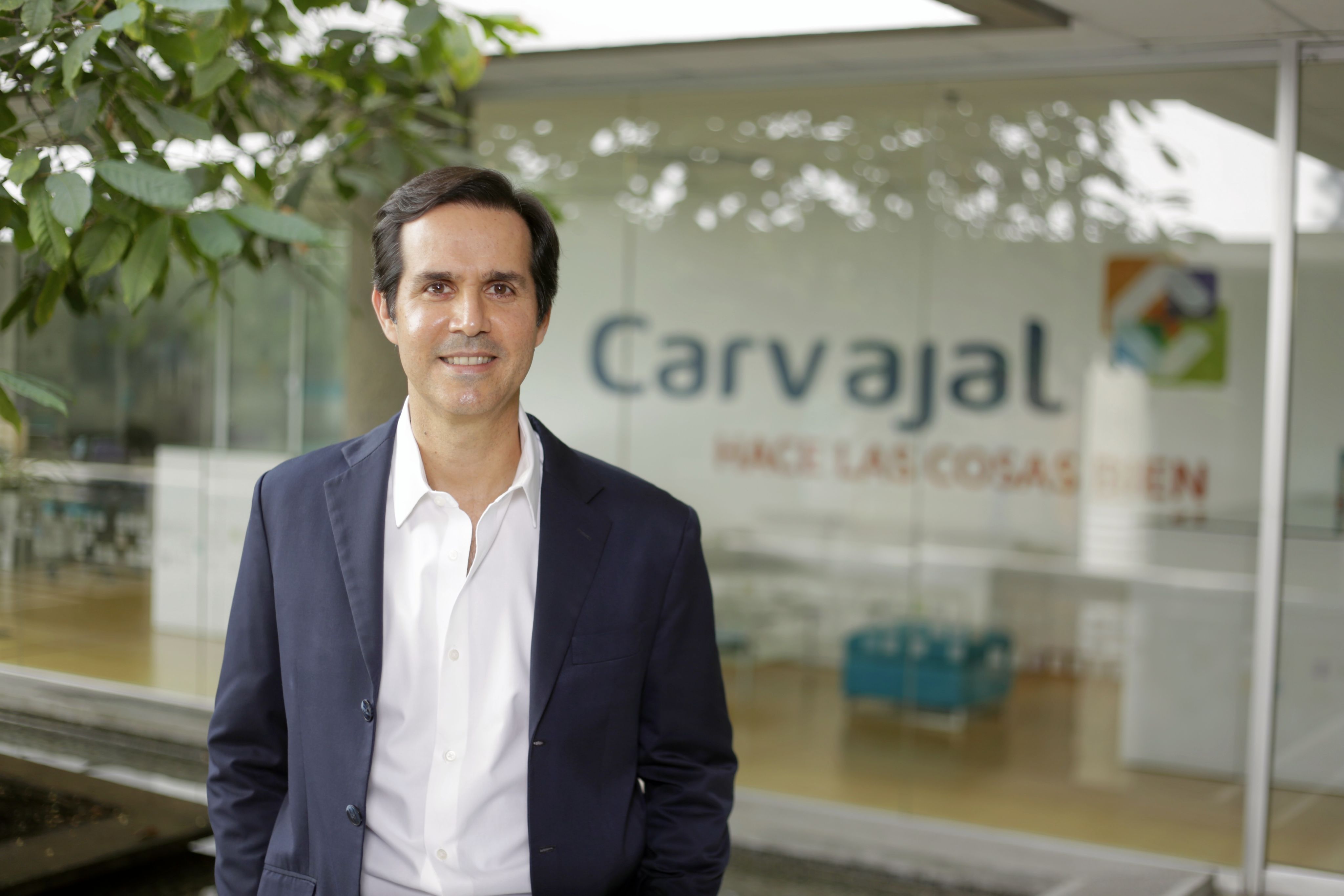

Only a few days after Pedro Carvajal was appointed CEO of his family’s centenarian business in 2020, he was faced with an unprecedented challenge: the COVID-19 pandemic upended life and commerce around the world sending a ripple effect of transformation through societies and industries.
Despite the formidable challenges, Pedro and the entire Carvajal organisation united around the company’s longstanding culture of putting people first and “doing things right”. Pedro and Carvajal’s chair worked closely, determined to see the company emerge from the pandemic even stronger. Many obstacles presented by the crisis became opportunities for Pedro and his team, who implemented changes to improve the organisation and bolster its resilience to future disruptions.
We spoke to Pedro about how his family’s core beliefs and social agenda are critical factors in maintaining the company’s performance and longevity, why he doesn’t think about the future too often, and how he balances his many roles.
You are one of only two family members with an operational role in the family business. What was the experience like when you first took over the CEO position?
The experience began for me in 2019. I was running the packaging division, which is the largest subsidiary we have. Our former CEO asked me if I wanted to participate in the executive selection process because the delegate committee had seen my profile and felt it fit with what they were looking for. But the committee also approached other consulting firms to assist in the CEO search. After many exams and interviews, I was appointed CEO of the Carvajal organisation in March 2020. Two days later, our plants were closed because of the COVID-19 Pandemic.
In my previous 20 years at Carvajal, and my time in the financial sector, I had gained some experience managing through rough waters, but waking up one morning and finding our plants shuttered was something completely new and challenging. The priority was ensuring our people were safe and supporting them and their families. Then, we established a routine where the company’s chair and I worked as a team to address the critical decisions that needed to be made. But the outpouring of encouragement from both employees and family members made our obstacles more structural than anything else. It was a very difficult time that also delivered some amazing personal experiences.

"In every decision, we felt like we were respecting our principles; we were respecting our purpose, which is extremely important to us."




In hindsight, do you feel the changes you made in your organisation due to the crisis were improvements?
The chairman and I discussed a lot at the time that we had to come out the other side of the crisis stronger as a company. Obviously, in those very long days, there was confusion and feelings of vulnerability, much of it driven by the daily news. I needed to make very important changes very rapidly. And the new dynamic that was created between the chairman and me presented an opportunity.
My team started pulling many different operational levers in the company because we didn’t have a sense of our timeframe. But in every decision, we felt like we were respecting our principles; we were respecting our purpose, which is extremely important to us. We wanted to make sure that through every single project we designed and implemented, we would come out stronger.
Interview with Pedro Carvajal, Tharawat Magazine and The Family Business Voice
Interview with Pedro Carvajal, Tharawat Magazine and The Family Business Voice
Have you carried over much of the methodology you developed during the pandemic now that business has largely returned to normal?
The disruption of the pandemic created many changes in behaviours and we still use the beneficial ones today. For example, we ensure all our important meetings are extremely productive from beginning to end. If a big decision needs to be made, we give ourselves one very constructive hour to make that decision. It’s a process we developed in the virtual meetings we held during the pandemic. It worked very well, and we continue to run certain types of meetings the same way.
I believe the pandemic helped us tap into a spirit of agility that is so important in today’s marketplace. It allowed us to be much more productive and to leverage digital technology and tools. The pandemic also made us focus on our ESG strategy, which goes to the heart of the Carvajal culture. Anyone who enters our facilities can feel a people-centered culture of caring. It’s something that everyone who works at Carvajal loves about the company.




In what areas is your approach at Carvajal similar to that of previous generations?
Growing up, I often heard the importance of the Carvajal Foundation stressed in our family conversations. It was at a time well before ESG initiatives had taken hold in business practices. I remember asking my father to explain why our foundation seemed just as important as the business that sustained us financially. He explained that the community is the largest shareholder of our company and the foundation was our way of giving back to it.
Fast-forward half a century and Conscious Capitalism is interwoven in everything we do at Carvajal. Besides our ESG strategy, we promote economic and social development by doing things the right way. That often means making the social part of our work as important as the economic part. And it’s something that I convey to my children just as my father did to me. It’s the way previous generations taught me to do business, and it’s how we conduct ourselves as an organisation today.
"Now that we’re into our sixth generation, with over 320 members, our family council plays a significant role in the company's management and encouraging the engagement of family stakeholders."
Do you feel that having family involved operationally in the business is important to maintaining its socially responsible focus?
I believe the governance structure that we’ve been developing is an extremely important tool for maintaining our family’s vision and principles in the Carvajal organisation. Now that we’re into our sixth generation, with over 320 members, our family council plays a significant role in the company's management and encouraging the engagement of family stakeholders. The Carvajal company has nine directors on the board, five of which are independent. The business also has many shareholders.
But by strengthening the governance structure and the work performed by the family council, we can establish a clear direction for the business and unify it. There will always be counter opinions, and those are important. Engagement from next-generation family members is critical to the future of Carvajal. Teaching younger generations what it means to be a responsible shareholder is a priority for us, and essential to preserving our vision of social responsibility.

You wear several hats as Carvajal’s CEO, an owner of the company, a father, and a leader in your family’s extensive network of members. How do you compartmentalise your responsibilities in so many roles at once?
I try to manage my work-life balance. I also understand the role our organisation plays in our community and how important it is that our activities are carried out with the highest integrity. It becomes a little simpler to juggle many responsibilities when my family values align with my business values. But those responsibilities still feel like they weigh on me twenty-four hours, seven days a week. When I get home, I try to be very present and appreciate the role I play with my family. My wife is an entrepreneur who experiences many challenges in that position, but she also understands the importance of being present at home for our family.
Now that you’ve navigated the company through the challenges of the COVID-19 pandemic, how do you approach strategic planning with your team to ensure the next disruption isn’t a threat to Carvajal’s future?
Disruption is a reality in every single industry today. In the food service business, which is one of our business segments, disruption is taking the form of sustainable packaging options for food products, especially in the fast food marketplace. We’re working to provide those solutions while also keeping an eye on the future in anticipation of the next disruption. Inside our organisation, we have an operations committee that focuses on short-term developments — what happened last month and what will happen in the next three months. But then we also have an entirely separate conversation about long-term strategy and the form that might take over the next three to five years.
I like to say that structure follows strategy, and after we’ve defined our strategy for growth in a particular business segment, we implement the structure to bring it to fruition. But it’s also very important to conduct a strategic review of our plans. In November, we refine the plans we’ve established for the upcoming year, but we also adjust and make changes as needed throughout the year. It’s like a system of checks and balances every three or four months where we determine what is working, what’s not, and where we have to make tweaks. When the following November rolls around, we look at how well our plans played out.

Interview with Pedro Carvajal with Tharawat Magazine and The Family Business Voice
Interview with Pedro Carvajal with Tharawat Magazine and The Family Business Voice
What impact do you hope your work and leadership at Carvajal will have on the company’s future?
I don’t dwell on the future very much; I prefer to be present and in the moment. But I think the most important aspect of the work we do at Carvajal, and as a family, is to live our purpose every day. Previous generations taught us how powerful and wonderful it is to serve. I would hope that message stays just as pertinent over the next 100 years. It’s how our family overcame crisis in the 1930s, world war in the 1940s, and a host of challenges connected to Latin America in the decades that followed. Our firm sense of purpose enables us to confront whatever obstacles and disruptions lay ahead.
 Built with Shorthand