
The Only Way Forward: Multigenerational Collaboration for a Sustainable Future
Interview with Dr Sanjay Sharma, Dean of the University of Vermont's Grossman School of Business, USA


By Lee Hoverd
What began as a reaction to the increased media coverage of environmental and social degradation in the 1970s — rivers of flame, abject poverty, and rapidly decreasing air quality — became a diverse global movement tied together by one word: sustainability.
Citizens organised, groups formed, protests were held, the first Earth Day was celebrated in 1970, regulatory agencies such as the US EPA were created, and eventually, investors, businesses and academics began to apply the principles of this new movement to their work.
The concepts we now term sustainability and ESG became formalised funds, strategic initiatives for business and concentrations of research; the ideas behind them were written into the canon of human consciousness as successive generations championed the cause, with some individuals dedicating their lives and careers to finding the way forward.
Dr Sanjay Sharma's work in exploring sustainable development and ESG began with a revolutionary idea. After 16 years in corporate senior management, he realised that the prevailing thought model, which pitted profits against environmental preservation and social equity, was not necessarily true.
And even more importantly, he imagined scenarios where profitability and sustainability not only coexisted but also fed into each other, creating an environment that benefitted all stakeholders, not just those with a share in the business.
So, Dr Sharma turned to academia, establishing insights and knowledge for businesses to build organisational structures, capabilities and skills, enabling the reconciliation of profitability with social and environmental performance.
Now, as the Dean of the University of Vermont's Grossman School of Business, Dr Sharma believes that the evolution of globally standardised ESG metrics will be important tools to implement such reconciliation one step further.
To reinforce those foundations and drive the change that Dr Sharma sees as inevitable, enterprising families should capitalise on next-generation passion, senior-generation wisdom and, most importantly, multigenerational collaboration. Because, as Dr Sharma puts it, there’s no going back; businesses must prioritise sustainable development or be left behind.
We spoke to Dr Sanjay Sharma about the origins of sustainability, the businesses that pioneered the movement and the best way for family businesses to carry it forward.



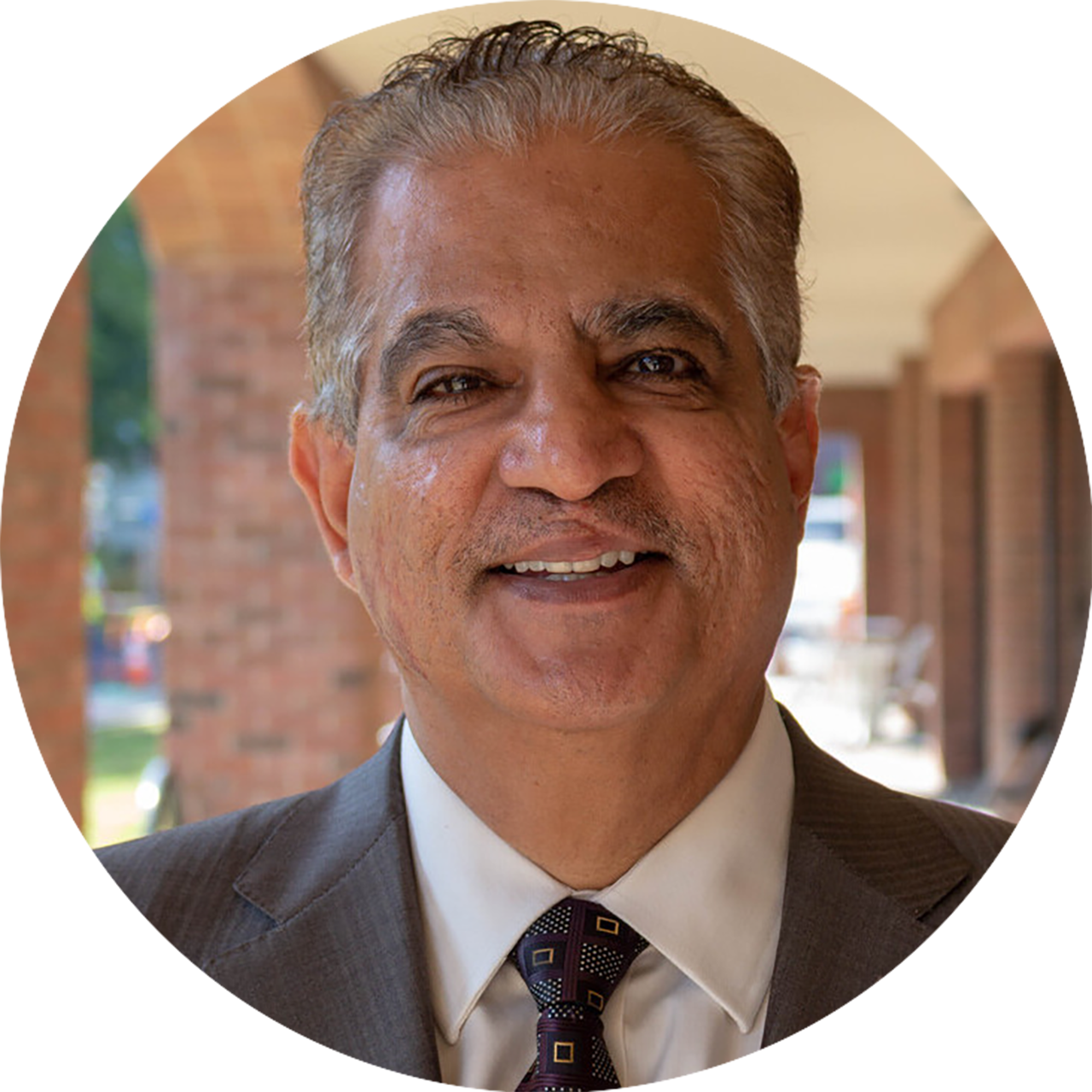
Dr Sanjay Sharma, Dean of the University of Vermont's Grossman School of Business, USA; image courtesy of the subject
Dr Sanjay Sharma, Dean of the University of Vermont's Grossman School of Business, USA









Where did the term ‘sustainability’ originate, and how is it defined today?
The term ‘sustainability’ evolved from the term ‘sustainable development.’ The concept of sustainable development originally came from the Brundtland Commission Report in 1987. Commissioned by the World Council for Environment and Development under the auspices of the UN, the report defined sustainable development as development that meets the needs of the present without compromising the ability of future generations to meet their needs.
The questions addressed by sustainable development were the sustainability of resources for future generations and equity, not only between different groups of people globally but also equity across generations. Over time, sustainable development became the simpler, shorter term, sustainability. The term is not uniformly used — sometimes, the focus is only on environmental preservation, and in some contexts, on both environmental preservation and social justice.
And what about the term 'ESG'?
ESG refers to metrics related to the environmental, social and governance performance of a business. Increasingly, investors are paying attention to the ESG scores of businesses when deciding to make investments. In the area of investment, it originally started as the acronym SRI, which stood for socially responsible investment.
This concept is by no means a new one; for a long time, religious organisations have avoided investing in certain businesses, such as those involved with alcohol or gambling. In the 1980s and 1990s, many investors avoided South African companies in protest against apartheid.
The movement really took hold in the 1990s when several investors, concerned about the social impact of businesses, set up SRI funds with specific investment criteria that addressed those concerns.
For example, those funds may have avoided companies involved in the manufacture of arms and instead pursued opportunities with companies that could demonstrate the societal benefit of their operations — for example, by providing clean drinking water to their constituents.
SRIs quickly picked up momentum; by the end of the decade, SRI investments totalled approximately $3 trillion. Over time, the terminology changed, and so did the basis to assess prospective investment opportunities. A firm’s governance in addition to its environmental and social impact became part of the investment benchmarks used by these funds, which laid the groundwork for today’s ESG investing.
By the end of 2020, ESG investments totalled around $38 trillion, and that figure is expected to grow to $53 trillion by the end of 2021.



What drove the growth in ESG investment?
The environmental sustainability movement started in the 1970s as a response to local, visible pollution. In the US, cities like LA were covered in smog, and all across the country, chemicals were being poured into rivers. The Cuyahoga River in Ohio caught on fire several times in the 1970s because of the sheer volume of chemicals being dumped into it. On top of this, there were nuclear accidents, such as the Three Mile Island reactor leak in Pennsylvania.
Writers, most notably Rachel Carson with The Silent Spring, started publishing works on just how harmful toxic chemicals are to the body and the planet, giving rise to the first Earth Day in April 1970, fuelling the environmental movement that sustainability and ESG would grow out of.
The focus began to widen beyond local environmental effects to the global repercussions of pollution. The depletion of the ozone layer due to chlorofluorocarbons (CFCs) in aerosols, which allowed harmful UV radiation to pass through the atmosphere, was one of the first global problems the movement addressed.
As a result, the companies that manufactured CFCs came together and even united with other companies and governments in the cause under the Montreal Protocol of 1987, which banned the manufacture of CFCs globally. From there, more discoveries and connections between greenhouse gases, global warming, the melting Arctic, rising sea levels and disruptions in weather patterns entered the collective global consciousness.
What started as a local concern in the 70s gradually became a global phenomenon, and the younger generations who grew up with that increased awareness eventually became decision-makers and took action. Protecting the planet became just as important as making money. The trend accelerated, and people began to see the link between environmental problems and social problems.
This connection is particularly apparent in poorer countries that don’t have access to alternative energy sources and must destroy their environment as a matter of basic survival. By providing these nations with economic resources and other energy sources, people aren't forced to destroy the environment.
This revelation solidified the connection between environmental and social causes, and because governance typically controls the way businesses act in relation to them, the three components coalesced as ESG.






The younger generations who grew up with that increased awareness eventually became decision-makers and took action.
Dr Sanjay Sharma, Dean of the University of Vermont's Grossman School of Business, USA
How did companies first start applying ESG to their operations, and who did pioneering work in this area?
The concept of waste reduction really spearheaded the movement in the business community. The thinking was simple: if a company used 100 units of raw material but only produced 60 units of finished product, then 40 units were thrown away as waste. Reducing this waste adds to the sold finished product and to the bottom line.
3M was one of the first to create a comprehensive company-wide waste reduction programme called 3P (Pollution Prevention Pays). Dow was another one, and along with several other companies, started saving hundreds of millions of dollars every year by simply reducing waste and energy. This was the first wave, and eventually, everyone caught on and realised that saving waste and energy was also profitable.
Taking it a step further was the development of the circular economy where waste is saved and reused in a closed-loop process. A carpet manufacturer called Interface was one of the first companies to integrate this concept into their operations. Interface, a family business, considered what happens to a carpet after 15 years.
Eventually, a worn carpet goes to the landfill, even if it's only worn in places. So, they started producing carpet tiles in small square footage that could be used in commercial and industrial applications to replace soiled or worn carpet segments rather than discarding the entire carpet. They would then recycle the old pieces of carpet they had replaced.
Interface started leasing floor comfort, an idea that sounds strange but became very practical. Interface would inspect the customers’ flooring regularly, replacing only the stained and worn-out tiles so that they always had carpeting that looked fresh and new. The entire closed-loop process resulted in very little virgin material being used. Interface’s sales grew, but it was their profits that increased in a very significant way.
At the same time, customers did not have to buy carpets every few years as capital goods but instead were able to charge them against revenues every month as lease charges. The seasonality of Interface’s revenues now became a regular monthly cash flow of lease charges. A win-win for the company, for the customer and for the planet.


Also in this collection:

|

|
|
|
|
|
|
|
|
How did other companies adapt their strategies?
The promise of increased profits coupled with environmental and social gains prompted many others, such as Nike and BMW, to use recycling as a major pillar of their operating model. For example, Nike takes its shoes back and also designs them in such a way that they can be broken apart and repurposed. BMW designs cars that are now 100 per cent recyclable, so the company can take them back and reuse their automobiles instead of them ending up in a landfill.
Alcan, an aluminium manufacturer based in Montreal, Canada, sold its mining operations to Rio Tinto of Australia and its manufacturing operations to the Aditya Birla Group of India. The Aditya Birla Group named the aluminium manufacturing company Novellis and initiated a restructuring that saw them shed their reliance on conventional mining operations entirely.
Instead of buying the raw material bauxite from mines, extracting the aluminium and manufacturing it into aluminium cans, they created a process that they call 'above-ground mining'. The company produces the aluminium cans for products like Coke, Pepsi and Sprite through a global logistics system that collects used cans, often relying on micro-enterprises and small businesses in poorer regions to collect and deposit them at recycling centres.
Novellis now uses only a small fraction of bauxite in the manufacture of their cans, with a majority coming from recycled material. Recycled aluminium uses 90 per cent less energy than converting bauxite to aluminium and generates major reductions in cost via energy savings, thereby increasing profitability.



Family businesses are feeling the pressure to adhere to these environmental and social standards. What is the most significant challenge they face, and how can they overcome it?
Yes — many family businesses are struggling with this. The senior generation has either built a business or has been very successful with their current business, and it’s always difficult to disrupt what you have, and what has been successful on which the prosperity of the family has been built. But for those firms with next-generation members eager to build a purposeful business that will address global challenges, it’s very important for there to be a coming together across all of the business’s generations.
Senior generations have decades of wisdom and expertise, while the younger generation is fuelled by passion and fresh ideas. If the senior generation wants succession to an engaged and motivated next generation, the two generations have to work together to succeed. Leveraging that combination of wisdom and passion is a tremendous asset for family firms looking to adopt an ESG approach.
Engaging in forums geared towards family businesses is another useful step on this journey. Through exposure to stories and examples of how others have incorporated sustainability and ESG into their operating models, family firms will see how these concepts best apply to them.
Forums can also help foster the necessary multigenerational collaboration and commitment by exposing the senior generation to proof-of-concept stories that show successful transitions.
Feel your best
both physically & mentally


Personal Health Tracking and
Guided Wellbeing




How does government policy fit into the ESG and sustainability movement?
Certainly, all businesses must contend with government policy when adopting ESG. Some governments have policies that make it easier for businesses to adapt and compete while adopting ESG performance metrics. However, for political imperatives, governments often change their stance, so family firms can’t build their ESG strategies based solely on government policy.
Core values of looking after people and protecting our planet are similar all over the world, but the emphasis of one over the other differs. In developed countries with strong social safety nets, the environment is given more emphasis. In developing countries with low incomes, the social justice and equality aspects are more important.
A family business cannot go wrong in any part of the world by taking care of people and the planet while generating profits for its owning family or investors. And indeed, family businesses are known for their embeddedness in their communities.
Over three decades of research and cases have established that businesses can build capabilities that perform well on the financial, social and environmental triple bottom line. This, again, is where commitment becomes so important. Without government compelling change, family businesses have to build the capabilities, structure, professionalism, purpose and mission that drives everybody, and then they also need to build partnerships with stakeholders who will help them achieve their goals.




What would hasten this transition to sustainable business on a global scale?
Over the last decade or so, the UN Sustainable Development Goals have become the standard that businesses all over the world have begun to benchmark themselves against. Unfortunately, right now, we don’t have clear and unified sustainable reporting standards.
As a result, companies use different metrics when it comes to something like the level of carbon emissions they intend to reduce in their operations, which is problematic because it is difficult to compare one company’s performance to another.
Standards are emerging – for example, the SASB (Sustainability Accounting Standards Board), which is currently in development and has reached a fairly advanced stage. So, it’s possible that the SASB will become the standard for sustainability reporting in the near future.
Once that happens, governments that are serious about sustainability can start adopting this standard, allowing accurate and reliable comparisons across different companies. This standardisation will support a unified way forward for ESG all over the world.
The uncomfortable reality is that the world faces huge challenges when it comes to environmental and social degradation, and business must be part of the solution. Businesses cannot operate in a world of depleted resources, unhealthy workers and consumers with declining incomes.
The only way forward is an acceleration of businesses adopting the triple bottom line approach of financial, social and environmental performance. There is no going back, and those that do not move forward will be left behind in the race to build the new economy, just as the horse and buggy was left behind with the invention of the automobile.
Pioneering Family Firms’ Sustainable Development Strategies, Pramodita and Sanjay Sharma’s latest book, can be purchased here.





There is no going back, and those that do not move forward will be left behind in the race to build the new economy.
Dr Sanjay Sharma, Dean of the University of Vermont's Grossman School of Business, USA


 Built with Shorthand