
Numi Tea: Generosity Infused
Interview with Ahmed Rahim, CVO and Co-founder, and
Reem Hassani, CBO and Co-founder,
Numi Tea, United States


By MariaElena McCabe
Innovating tea, arguably the oldest drink in human history, might seem contradictory. But Reem Hassani and Ahmed Rahim, sibling co-founders of Numi Tea, are changing how tea impacts the world.
Their business's many sustainability initiatives and partnerships introduce people to new tastes, new possibilities and a brighter future all at the same time.
Both Ahmed and Reem were inspired by tea's cultural significance in their birthplace, Iraq. Seeing that significance mirrored in various communities globally — what they term the hospitality or generosity of tea — moved the siblings to start a business sharing tastes from their childhood with consumers in their adoptive home.
Their determination to use tea as a method for healing mentally, physically and communally meant pioneering philanthropic operations at the source. The teas, expertly blended by Ahmed, fund a host of far-reaching sustainability projects, some of which were established as far back as 1999, the year Numi was founded.
From Numi’s inception, they set strict goals and boundaries for the company: identifying and chasing up key development criteria in tea-farming communities such as access to clean water and education all while limiting abuses, wage-related or otherwise, by purchasing ingredients exclusively from fair-trade and labour organisations.
Reem is the artistic director for the brand. Her original artwork informs everything from the smallest detail on an individually (and sustainably) packaged teabag to the brand experience as a whole. Both Reem and Ahmed are evidence of the maxim: do what you love. And they are just as passionate about making a positive impact as they are about tea.
We sat down with Ahmed Rahim and Reem Hassani to discuss the connection between tea and development, the generosity that the drink symbolises, and the method with which they ensure their company lives up to their sustainability values.
Image: Tea farm; image courtesy of Numi Tea






Reem Hassani, CBO and Co-founder of Numi Tea and Ahmed Rahim, CVO and Co-founder of Numi Tea; image courtesy of Numi Tea
Reem Hassani, CBO and Co-founder of Numi Tea and Ahmed Rahim, CVO and Co-founder of Numi Tea; image courtesy of Numi Tea

Numi tea with ingredients; image courtesy of Numi Tea
Numi tea with ingredients; image courtesy of Numi Tea
When you started Numi Tea in 1999, what was the original concept for the business? Has it stayed true to your vision?
Reem: The original idea wasn’t much different from what we see happening today. We wanted to create a tea company, specifically to import a type of dried desert lime tea, noomi basra in Arabic, that we drank as children in Baghdad. This tea had become a common theme in our reminiscences, and at some point, we decided that somebody should bring it to the US.
At the time, Ahmed had recently opened some tea houses in Europe and had acquired a vast knowledge of the industry. He knew how to navigate the market as a whole, whereas I was only familiar with this particular tea and its significance in Iraqi culture.
I was studying art, and so we decided to combine our talents. I would cover the brand vision and packaging, and Ahmed would focus on growing, buying and brewing the actual tea.
Ahmed: Noomi basra was the start, but there was plenty of room to innovate elsewhere as well, bringing various herbs and teas to the USA that hadn’t been introduced here yet. I had been travelling in Europe for about ten years and never planned to relocate permanently; I assumed I’d settle in Europe. So personally, that part of my plan changed. But as far as the product and ethos around what we introduced, we’ve only expanded.
We always stuck with real ingredients and have branched into flowering teas, turmeric, and pu-erh tea. We still focus on importing teas, herbs and spices that are uncommon in the American market.









Reem Hassani, CBO and Co-founder of Numi Tea and Ahmed Rahim, CVO and Co-founder of Numi Tea; image courtesy of Numi Tea
Reem Hassani and Ahmed Rahim, CEOs and co-founders of Numi Tea


- Ahmed Rahim, CVO and Co-founder, Numi Tea
What's your dynamic like as sibling co-founders and co-entrepreneurs?
Reem: Ahmed has always had an entrepreneurial spirit. When we were kids, he was always selling at fairs and creating side businesses. I was his sidekick, making signs and drawings for his ventures. But Numi was the first time we joined forces in a formal business setting.
Ahmed: We’ve always been able to connect because we're both artists; we have creative spirits. We're both immigrants as well, and we've always used each other as a sounding board to translate the differences between the culture of our upbringing and the culture that we now exist in.
We had to define our roles because in running a business together, our relationship changed. We were challenged by new and difficult conversations and the realities of joint decision-making.
The first decade or so was filled with learning opportunities. We learned more about each other and how to collaborate productively. At the same time, we were also learning about the industry, marketplace and tea business, about people and what the future of our enterprise could be. But there were so many elements that worked smoothly between us, and we always have our familial culture to fall back on.


Also in this collection:

|

|

|
|
|
|
|
|
|
What motivates you, your passion for sustainability or your passion for tea?
Ahmed: Both — coming from a hospitable culture, we’re able to look at our product, a beverage, and see how the idea behind it is inherently generous and giving. Through our appreciation for the authenticity and cultural significance of our products and through our shared artistic passion, we’ve been able to create something very attractive.
We’ve proven that we care about our farmers through fair trade as well as giving back to them in other ways. We've proven that we care about our customer base by not using plastic overwrap and by committing our entire product line to organic.
By being thoughtful about our environmental impact and our social commitment, which we’ve had from day one, we’ve exuded a culture of servitude and respect for one another.
Reem: One might initially purchase tea from us based on the packaging, but they’ll come back because of the taste. For us, it wasn’t selling a product, it was sharing a recipe, and that recipe is part of our family.
And now with this business, our family has grown. Our family are the people that we purchase from, that we work with — it's not just transactional. These relationships become personal, and this attitude is a reflection of our culture — it's how we grew up and how our mother raised us.

- Reem Hassani, CBO and Co-founder of Numi Tea


Numi Tea and H20pe Madagascar; image courtesy of Numi Tea
Numi Tea and H20pe Madagascar; image courtesy of Numi Tea






One might initially purchase tea from us based on the packaging, but they’ll come back because of the taste.
Reem Hassani, CBO and Co-founder, Numi Tea
How did the sustainability initiatives you're now known for come about, and how integrated within the tea industry are they?
Reem: We try to keep a framework around where we put our efforts, particularly regarding the foundation. Our initial idea for the foundation was to work directly with Iraqi children, but that was difficult with so much unrest due to the US invasion.
Later, we were able to do a project in Iraq through an organisation founded by our cousin, a summer school programme to help at-risk youth and keep them in school.
In terms of education closer to home, we decided to create a curriculum centred on art, gardening, and social studies — underrepresented and impactful subjects dear to our hearts — to reach students who aren't otherwise exposed to these topics. The Oakland Unified School District integrated this curriculum into a series of programmes, reaching over 12,000 kids in the Oakland Bay area.
The water initiative, Together For H20pe, was a direct result of realising how much water we were using to produce our tea. With so many millions of bags of tea sold, and so many millions of gallons of clean water used to brew them, you have an epiphany: almost a billion people on the planet don’t have access to safe, clean drinking water, and we can do something about that.
Our pilot project was in Madagascar where Ahmed had been working with a team of farmers. Within six months, we had built 24 wells which provided access to clean water for 5,000 people. We replicated the project in India, where we also focused on training and communal involvement.
Most recently, we recently created a COVID relief programme to better serve kids who were forced to stay home during the pandemic. So many low-income families rely on school programmes to keep kids fed. We pivoted to provide 800,000 pounds of fresh produce to thousands of families in the area. The lines at food banks were longer than they’d ever been before, so this new direction seemed like an obvious choice; here was an issue we could do something about.
What obstacles along the supply chain stood in the way of your sustainability goals?
Ahmed: The most difficult thing we’ve had to deal with is the packaging. It’s one of the few things that’s outside of our management capabilities because it’s done by large companies who exclusively make petroleum-based products. Everything is plastic now, so we had a hard time finding sustainable materials.
Because of that, we had to make some sacrifices over the years because of what was available and what made the most financial sense for the company.
Consumer demand for eco-conscious materials has increased, and so, after 20 years, we were finally able to make the change and introduced a plant-based overwrap. The culture is changing, and everyone is doing their part to demand sustainable packaging and to reduce or eliminate plastic packaging and bags.
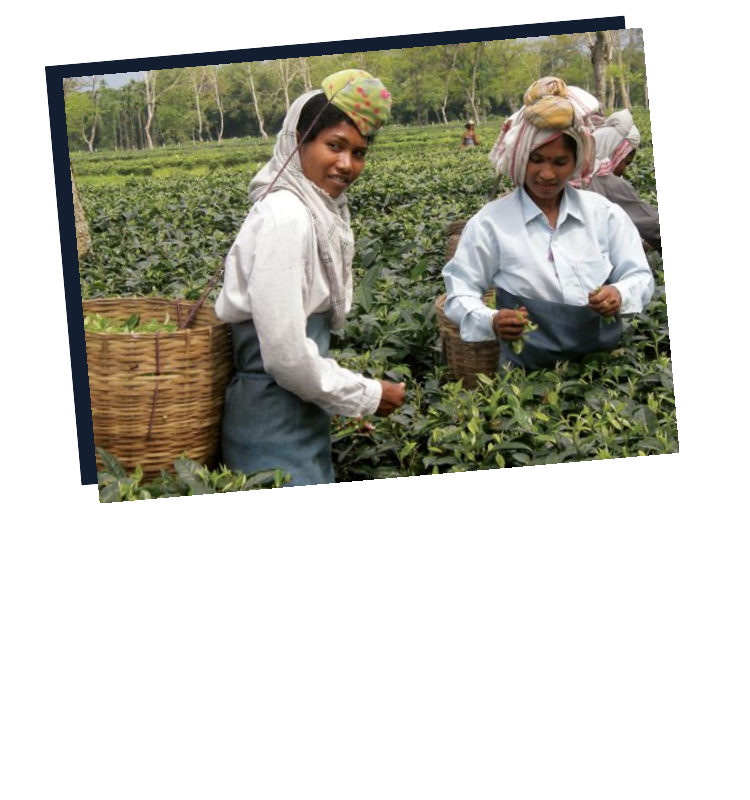
Tea farmers with baskets; image courtesy of Numi Tea
Tea farmers with baskets; image courtesy of Numi Tea

Picking tea; images courtesy of Numi Tea
Images courtesy of Numi Tea
How do you ensure these sustainability initiatives work? Do you look primarily to recruitment, or is there a system of governance within Numi?
Ahmed: There are three things to consider. Do your due diligence to really understand what you’re walking into and what people are really experiencing. If you enter a situation outside of your own sphere, you need experts to guide you.
Second, surround yourself with good people, partners and organisations. The right non-profits and the right leaders will be organised and reliable and will know how to facilitate a project.
Lastly, do what’s closest to your heart. Things move with positive intent when the project is personal. If you look toward causes that you’re intimate with, understand the need, and surround yourself with great people, then you’ve got the formula for success. Time and money are the only things that can get in the way, but with diligence and people who believe like you do, anything is possible.


H20pe Madagascar; Image courtesy of Numi Tea
H20pe Madagascar; Image courtesy of Numi Tea

- Ahmed Rahim, CVO and Co-founder, Numi Tea
Feel your best
both physically & mentally


Personal Health Tracking and
Guided Wellbeing




Has Numi Tea changed who you are?
Ahmed: The world of an artist, I think, can feel quite fragmented, being pulled in a lot of emotional directions. Numi has made me a more balanced, grounded and responsible person. It has really helped me concentrate on what I’m doing and why. When I was living as an artist, I don’t know if I was conscious of that.
When you’re responsible for people in a business and you’re staying true to commitments you’ve made to your partner in business, you put more care into everything, including all the relationships involved. I’m more aware of how I show up now.
Reem: I agree that it's been grounding. For me, I think I’ve gained a confidence that I didn’t feel 20 years ago. As an entrepreneur, I’ve had to let go of fear, artistic fear as well, and let myself do whatever I want and really believe in it. Of course, I was also able to achieve financial stability outside of my art, which has its pros and cons. I still have practice to do, and one day I’ll get there.



As an entrepreneur, I’ve had to let go of fear, artistic fear as well, and let myself do whatever I want and really believe in it.
Reem Hassani, CBO and Co-founder, Numi Tea
What's next for Numi?
Ahmed: We create three-year plans to give our team direction and vision. This way, we stay aware of our financial goals, and know where we want to be in terms of innovation, product development and, of course, our sustainable initiatives and causes. We wish to maintain our position as the boldest and most sustainable brand on the market, not just in tea but in consumer-packaged goods. We want to keep pushing the envelope and be brave about why and how we do things, and we have a team committed to maintaining those values.
We must never lose track of where the industry is lacking — where the real opportunities for improvement exist. But we must also collaborate because we can’t do it all on our own. Numi is a participant in change, with incredible people propping it up.
We are all holding hands on this journey, trying to accomplish all we can and make change where change is needed most. We must also allow time for the mysteries to unfold, and opportunity to show us where and when we can be most impactful.


 Built with Shorthand